Role
Senior product designer

Defining the workflows, architecture, and reusable foundations behind a configurable enterprise KYC & AML platform.
Senior product designer
0→1 enterprise platform
KYC & AML platform
Joining Arachnys during the early stages of their new platform, I helped shape a new enterprise product designed for financial institutions conducting Know Your Customer (KYC) and Anti-Money Laundering (AML) investigations. Rather than iterating on an existing experience, we were defining the product, its workflows, and its foundations from the ground up.
Designing for compliance introduced a different kind of complexity. Investigators needed to navigate large volumes of interconnected data while following strict regulatory processes, and every interaction needed to balance usability with traceability, auditability, and operational confidence. The challenge wasn't simply making complex software easier to use—it was creating a product that organisations could trust for high-stakes financial decisions.
Working closely with product, engineering, legal, compliance, and finance, I translated ambiguous requirements into coherent workflows, rapid prototypes, and reusable interaction patterns. Alongside the product itself, I established early design-system foundations that brought consistency across an expanding platform while leaving room for future client-specific configuration.
The result was a scalable product foundation that helped transform an emerging concept into a credible enterprise platform—one capable of evolving alongside both customer needs and an increasingly complex regulatory landscape.
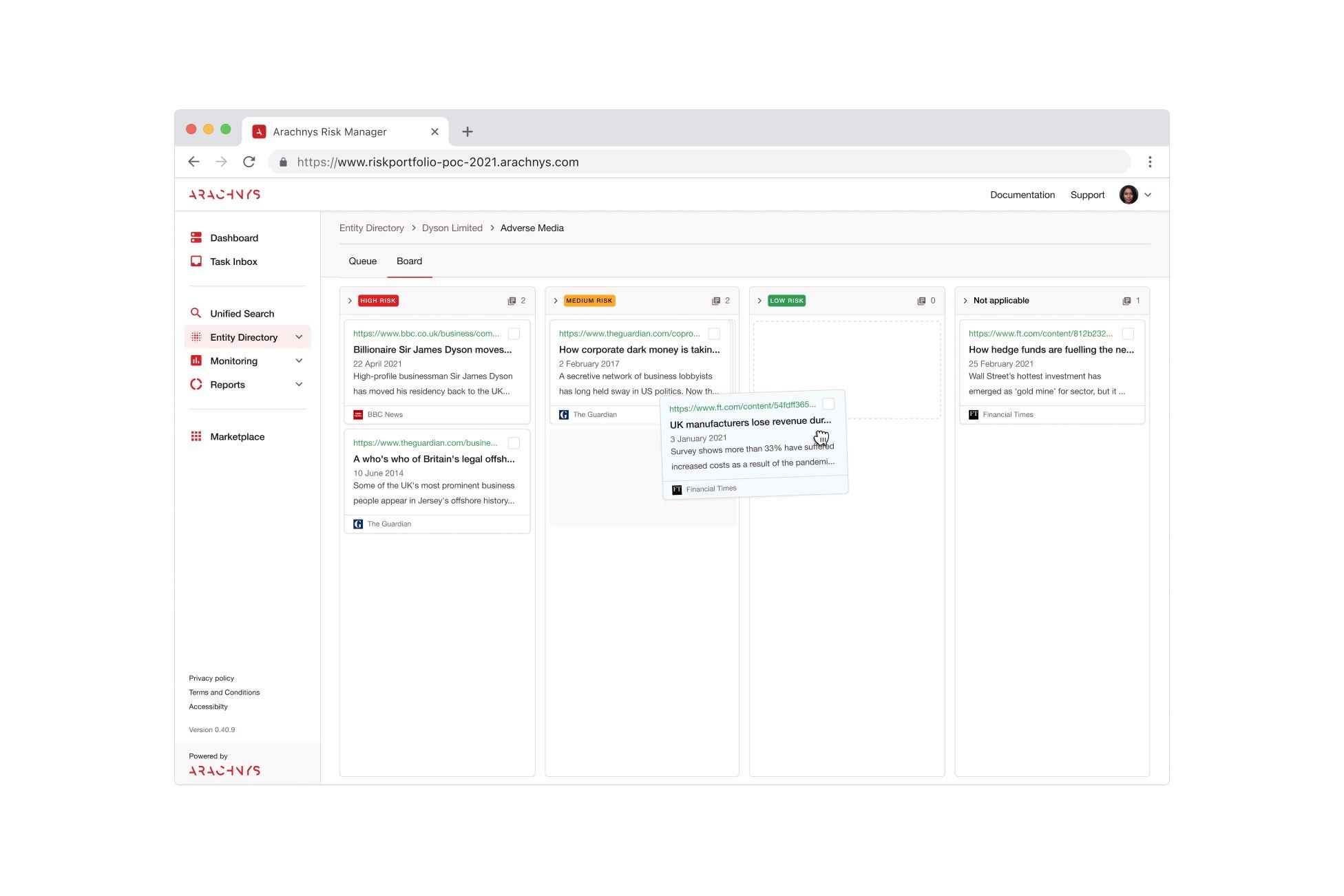
Unlike traditional product redesigns, the challenge wasn't to optimise an existing experience—it was to define one. Many workflows, client requirements, and technical constraints were still emerging, requiring design to become a tool for exploration rather than refinement.
By translating complex regulatory concepts into tangible prototypes and reusable interaction patterns, I helped the team move from abstract discussions to shared product decisions. This allowed stakeholders to validate ideas early while establishing a foundation that could evolve as the platform matured.
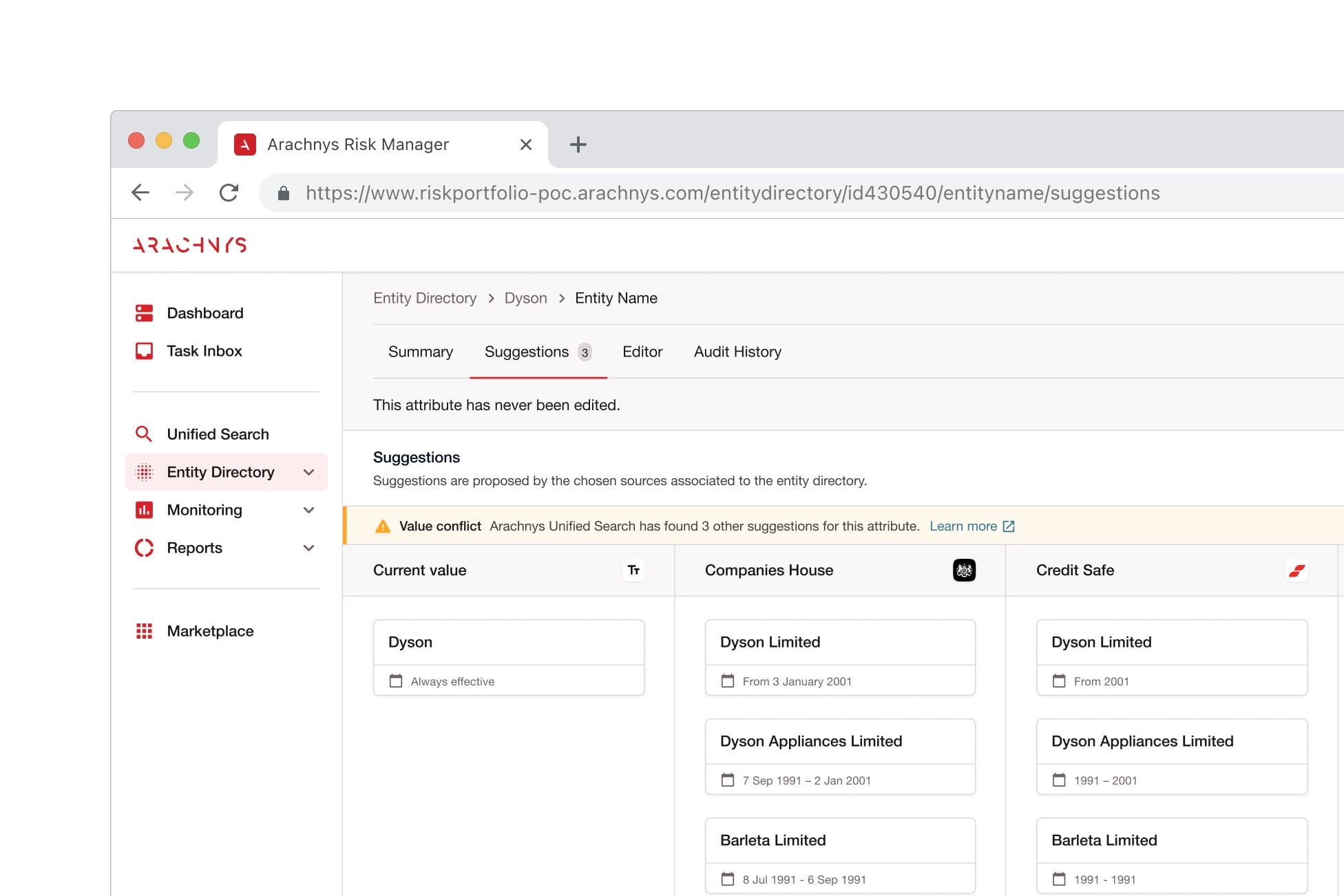
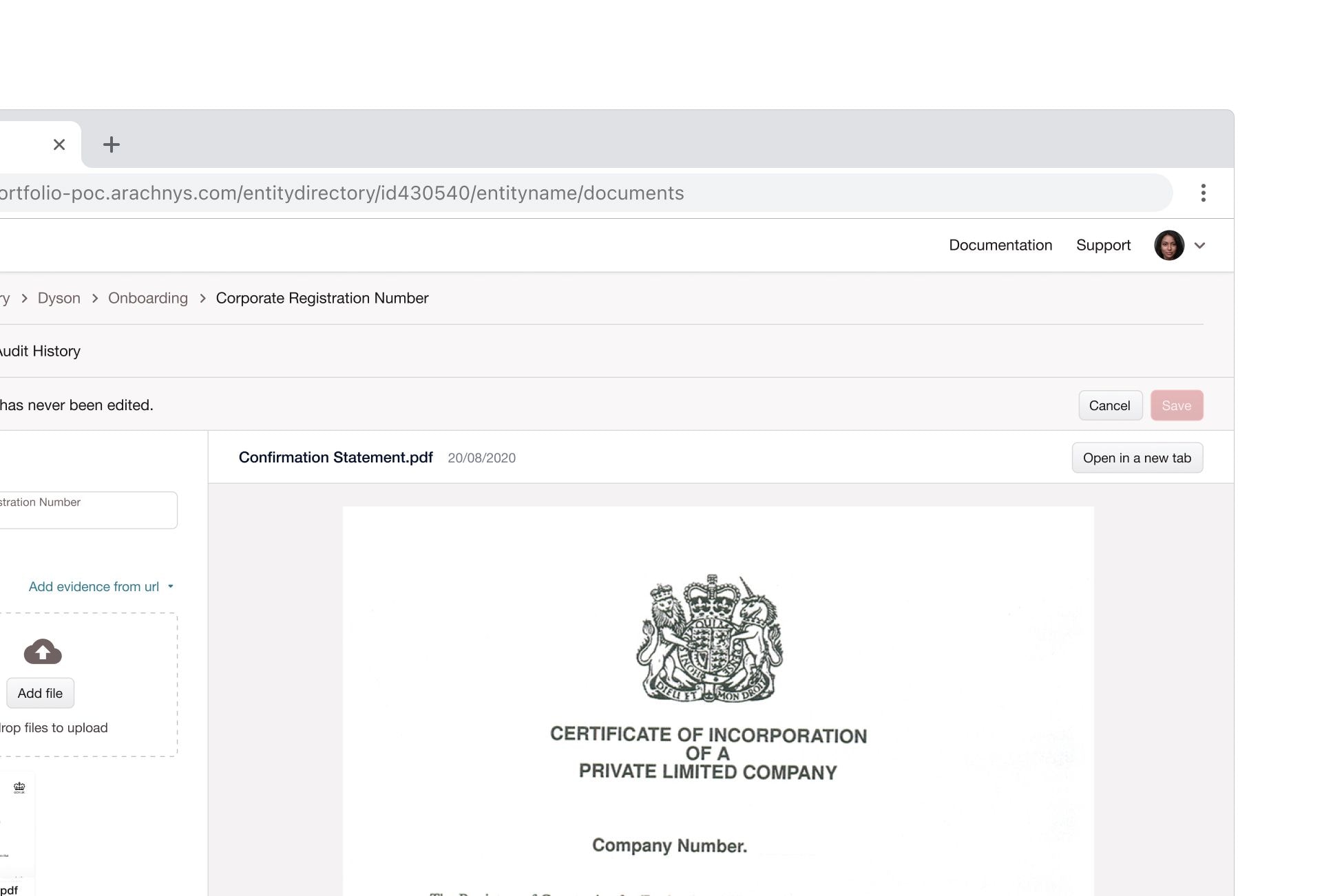
The initial objective wasn't simply to ship features—it was to establish a product foundation that could support the platform's long-term evolution. Instead of designing isolated screens, I focused on creating reusable workflows, shared interaction patterns, and an experience architecture capable of adapting as new clients, data sources, and regulatory requirements emerged. This work laid the foundation for a 0→1 enterprise platform, providing a flexible framework that could grow alongside the product.
Working alongside six cross-functional stakeholder groups—product, engineering, legal, compliance, finance, and leadership—rapid prototyping became a collaborative tool for validating ideas, reducing ambiguity, and aligning decision-makers around a shared product vision. This enabled the team to translate abstract regulatory requirements into a coherent enterprise platform with greater confidence.
The resulting foundations supported consistent product development while making future modules easier to design, extend, and maintain. Along the way, I introduced more than fifteen reusable design principles and interaction patterns, establishing the product's first shared UX foundation and influencing how new capabilities continued to be designed as the platform evolved.
0->1
6
15+
How one configurable component enabled dozens of product teams to solve different problems without compromising consistency.
Design systems
Reimagining the property investment journey through clearer guidance and progressive disclosure.
Product design
Introducing prioritisation frameworks that improved transparency and delivery confidence.
Design operations

Establishing ownership, contribution pathways, and measurable adoption across the organisation.
Design operations